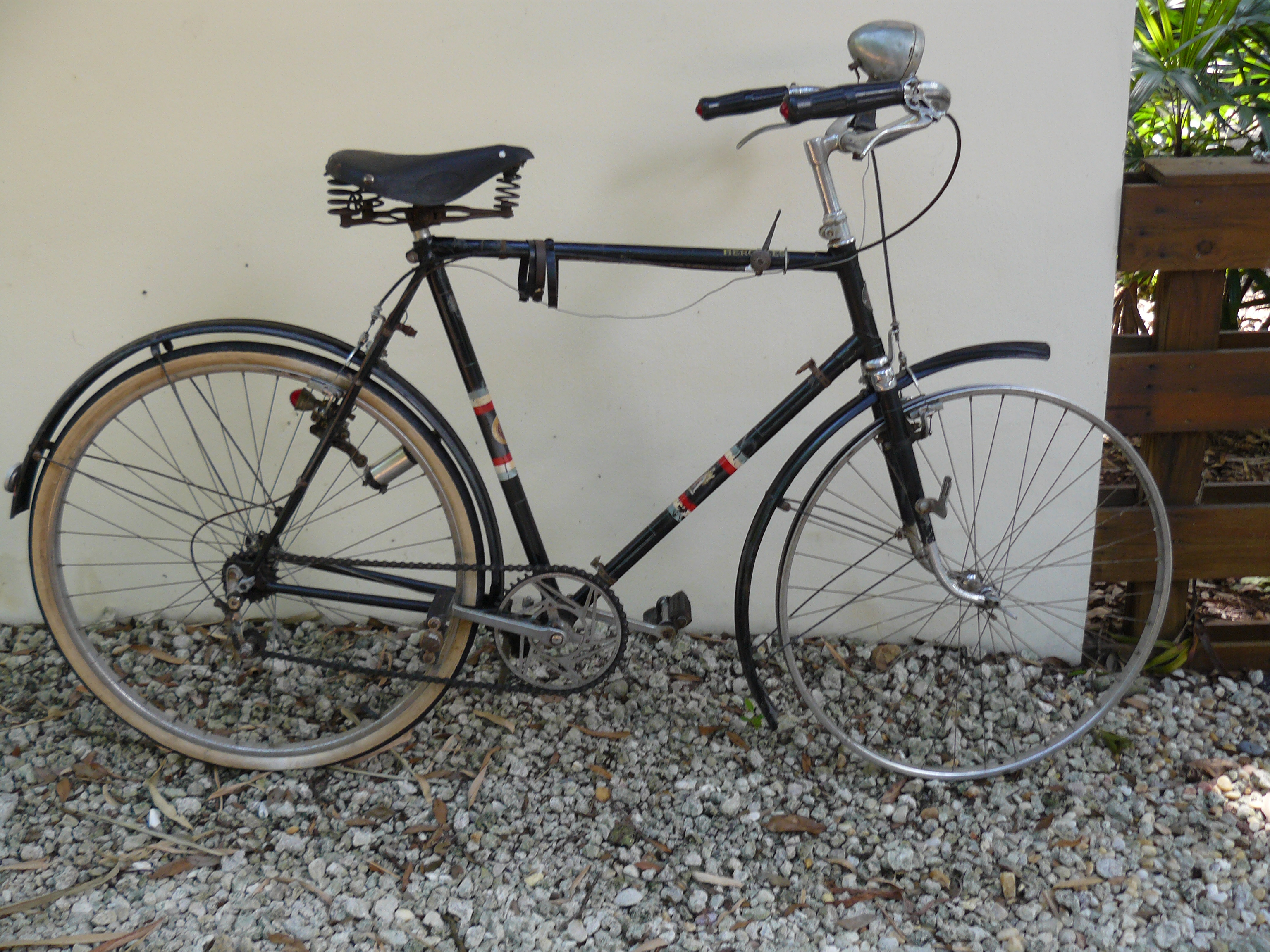
This site is dedicated to the people that built bicycles and would have wanted them to remain showroom ready and to those that have a vintage cycle and need the inspiration to bring it back to like new. This is my story of restoring a 1940's Hercules bicycle, an English Roadster and some of the info I learned while doing so.

It wasn't pretty when I first got it but it had potential, so the first thing was to start stripping the parts off. In order to keep a record of where all the parts went and how they were installed I took pictures from every angle I thought I needed

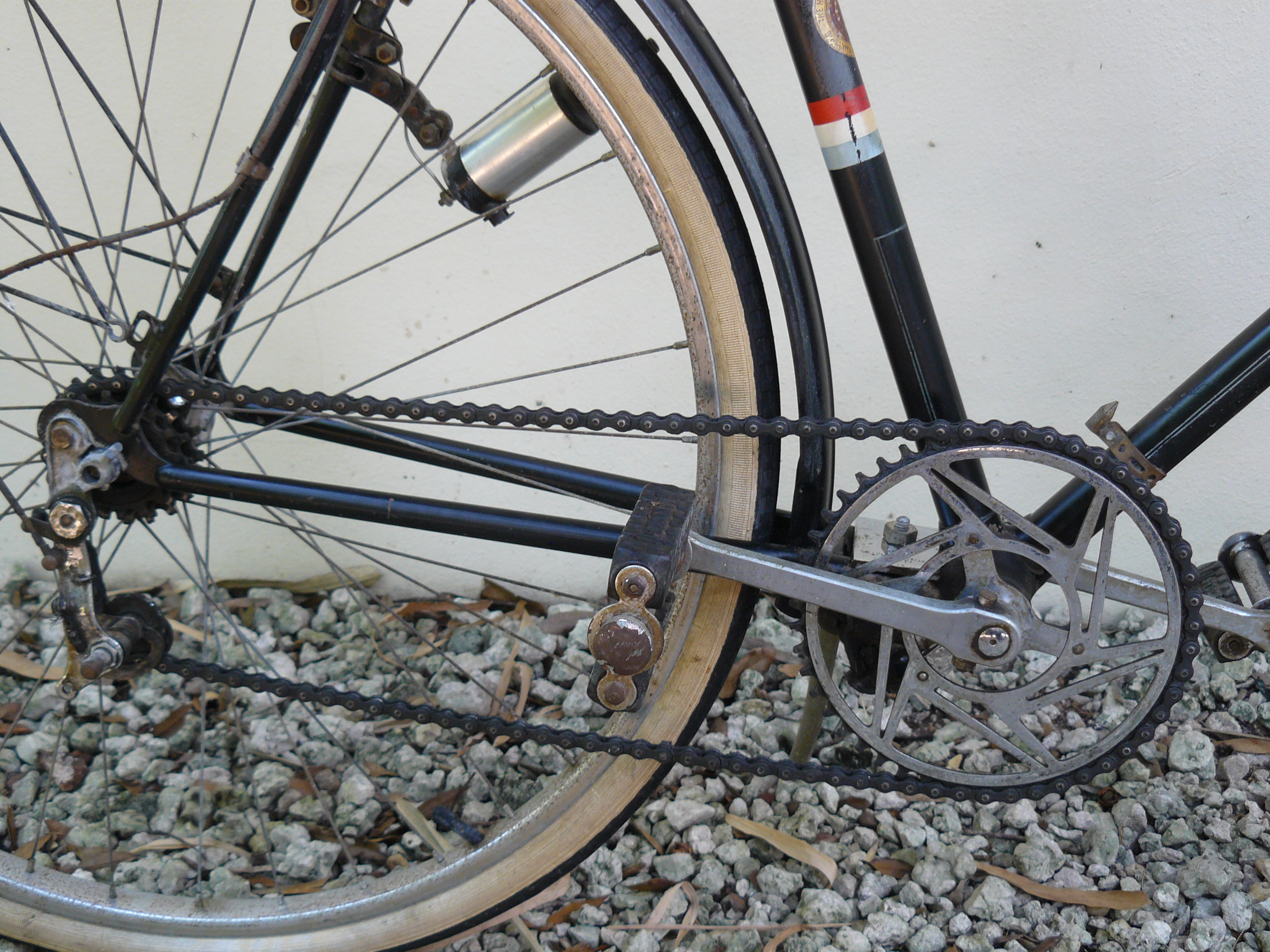
Once I felt comfortable with knowing the parts I started one by one taking a part off and cleaning it with simple green and steel wool and on some of the more stubborn parts lacquer thinner. Each part was taken apart and each nut and bolt fully cleaned and reassembled. Once I got to the frame I tried to find transfers to match the decals on the bike but, no luck so I decided to mask off the original transfers and paint the rest of the bike with black laquer. I then fired up the compressor and took automotive clear topcoat and sprayed everything to give it a deep, durable shine.
Obviously, certain parts weren't made to last 70 years like tires and cables so they needed to be replaced, I could have spent a small fortune on trying to obtain actual tires and cables from the forties but I didn't want to go that route. Instead I wanted a reliable, functioning bike with all the original parts that were available without breaking the bank.
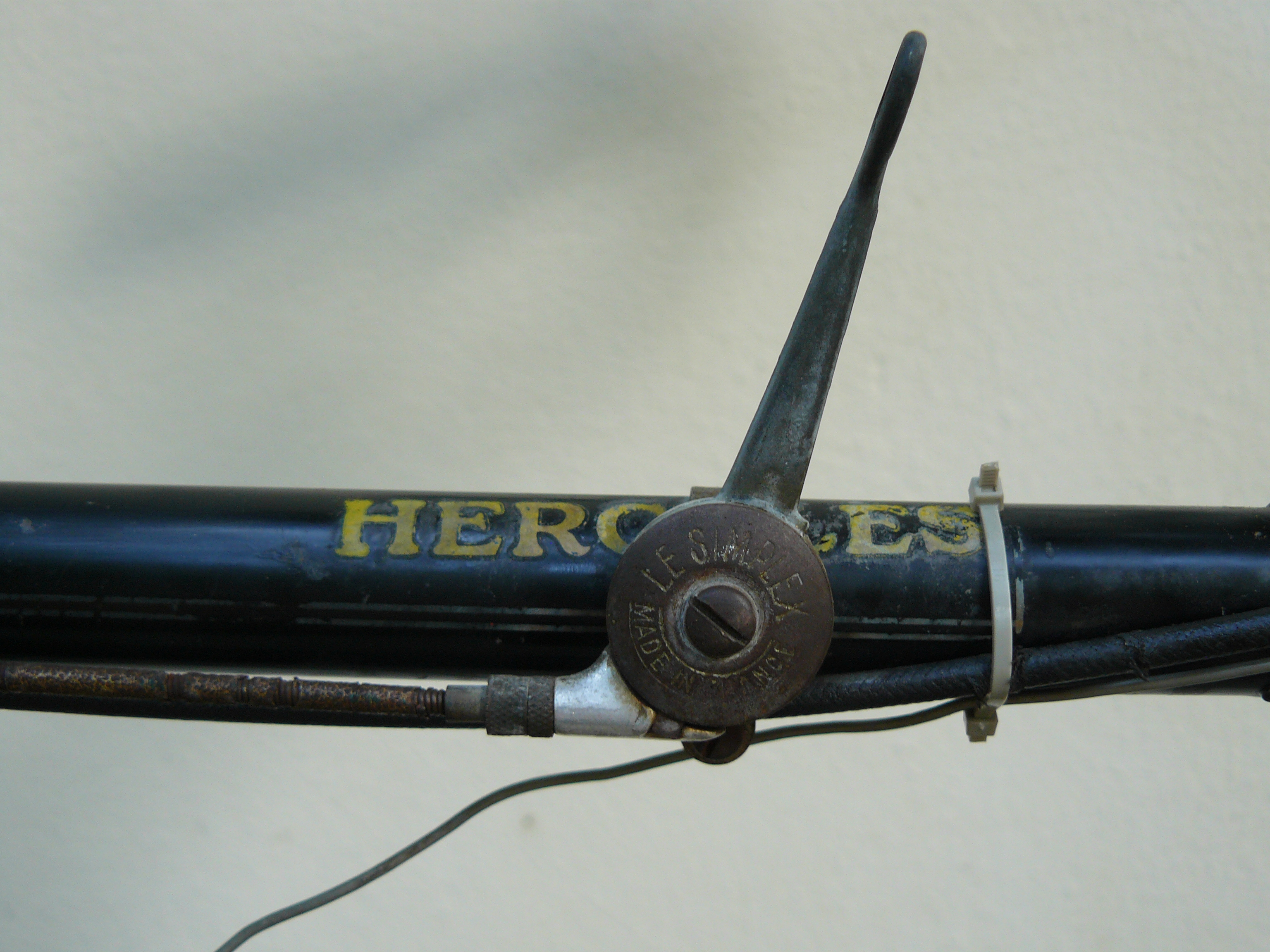
Now for some of the interesting things I learned while doing this restoration. English bikes in the forties were grouped into three classifications, lightweight, middleweight and heavyweight, this bike was considered a middleweight with it's 26" tires. Hercules Bicycle and Motor Company was founded in 1910 in Birmingham, England by Sir Edmond Crane. He and an uncle purchased Petros Cycle Company and then produced their own line of cycles. The name Herculese was chosen for it's associations of durability and robustness. Most bikes from England in the forties had rod brakes and not cantilever brakes like this one. The reason for the change was that any bike exported over forty pounds was slapped with a large tariff. To avoid these fees they went to the lighter cantilever brakes and Simplex derailleur ( which by the way won the 1947 Tour de France by rider Jean Robic) as well as the elimination of a chainguard instead of the rod brakes and Sturmey-Archer hub.
Another interesting bit of trivia is the lighting on the bike is from Phoebus of Switzerland. Phoebus was a company formed by Osram, Philips and General Electric in 1924 to control the manufacture and sale of light bulbs. They monopolized the industry in an attempt to keep light bulbs life at 1000 hours, thus selling more bulbs at a higher price. The company was closed in 1939 after the North European Luma Co-op Society produced and sold lamps at a considerably lower cost.
The hubs on this bike are Bayliss-Wiley, first introduced in 1938. Their freewheel hub won the CTC ( Cyclists Touring Club ) award that year. The hub takes multiple sprockets and has an integrated freewheel and is much lighter than the Sturmey-Archer hub.